

The evolution of the bicycle: How bicycles changed over the centuries
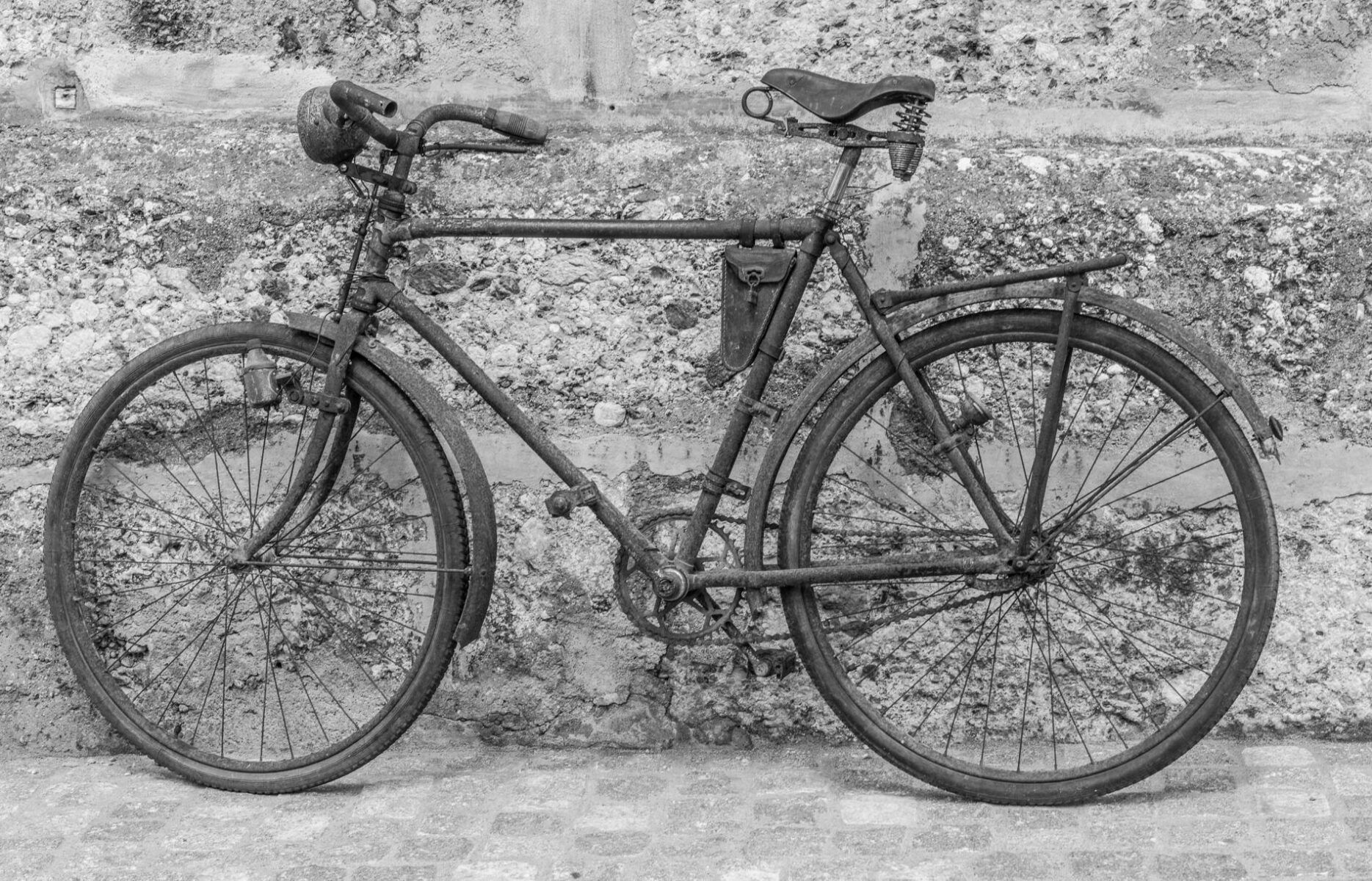
The bicycle, once a simple 19th-century invention, has undergone a long and fascinating journey of evolution. From the earliest wooden models to the technologically advanced machines of today, the history of the bicycle is filled with innovation and adaptation. This article will guide us through key moments in the evolution of the bicycle, exploring how these changes reflected and influenced our culture and technology.
Beginnings: 19th century
Draisine and velocipede
The history of the bicycle begins with the laufmaschine (1817) by Karl Drais von Sauerbronn, a wooden running machine without pedals. Later came the velocipede (1860s), the first bicycle with pedals, introduced by Pierre Michaux and his son Ernest. These early bicycles were heavy and cumbersome but represented an important step towards the modern bicycle.
Development of high-wheelers
The latter part of the 19th century saw the popularity of high-wheelers, known as penny-farthings. They were characterized by a large front wheel and a small rear wheel. Though faster than their predecessors, they carried the risk of serious accidents.
Breakthrough: The advent of the safety bicycle
In 1885, John Kemp Starley presented the ‘safety bicycle,’ establishing a standard recognizable to this day: two wheels of the same size, a chain driving the rear wheel, and a diamond frame. This design significantly improved the safety and efficiency of bicycles, paving the way for mass popularity.
20th century: Innovation and specialization
Flourishing and accessibility
With the development of mass production in the 20th century, bicycles became more accessible. Innovations such as brakes, pneumatic tires, and improved gear shifts greatly enhanced riding comfort and performance.
Emergence of specialized bicycles
The 20th century also brought specialization. Mountain bikes for off-road riding, road bikes for fast and long-distance travel, BMX bikes for stunts, and touring bikes for travel were introduced.
Late 20th century: Technology and design
Introduction of high-performance materials
The end of the 20th and the beginning of the 21st century marked the introduction of modern materials such as carbon fiber, aluminum, and titanium, significantly reducing the weight of bicycles and increasing their durability.
Design and ergonomics
The design of bicycles also evolved. Ergonomics, aerodynamics, and style became key elements of design, resulting in not only more efficient but also aesthetically attractive bicycles.
21st century: Bicycles in the digital era
Development of electric bicycles
The introduction of electric bicycles (e-bikes) opened a new chapter. With electric assistance, these bikes have become popular among those seeking an alternative urban transport medium.
Integration with digital technology
Simultaneously, digital technology found its place in bicycles. GPS, tracking systems, training apps, and integration with smart devices have become part of the modern cycling experience.
The history of the bicycle is a story of continuous innovation and adaptation. From wooden draisines to advanced e-bikes that you can charge at Bicycle Charging Stations, the bicycle has come a long way, reflecting and influencing changes in technology, culture, and modes of transport. Its evolution is a testament to how human creativity and engineering can transform simple ideas into essential tools of daily life, changing the way we move, recreate, and interact with the world.